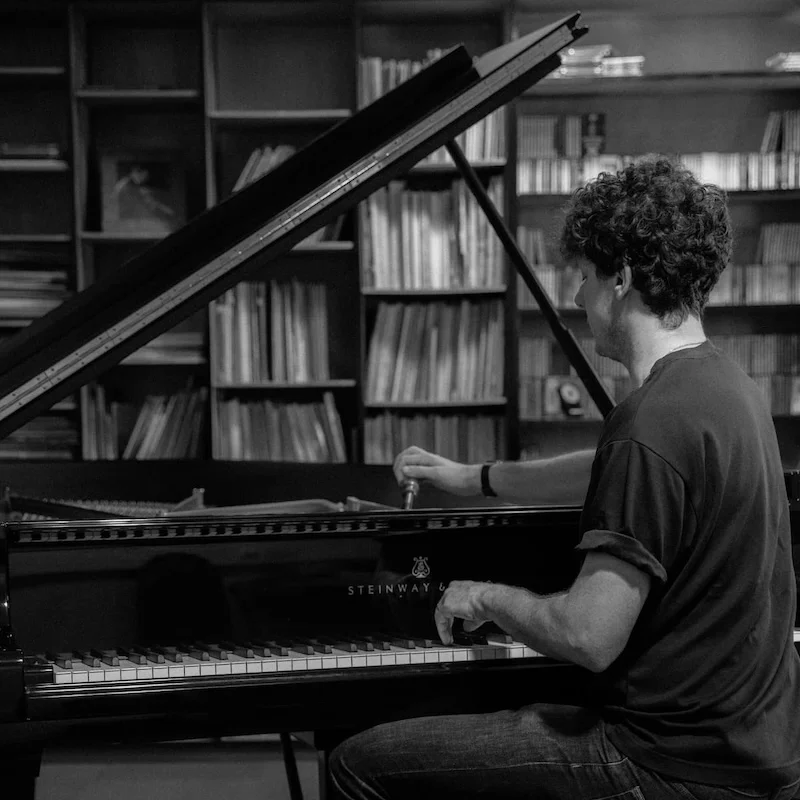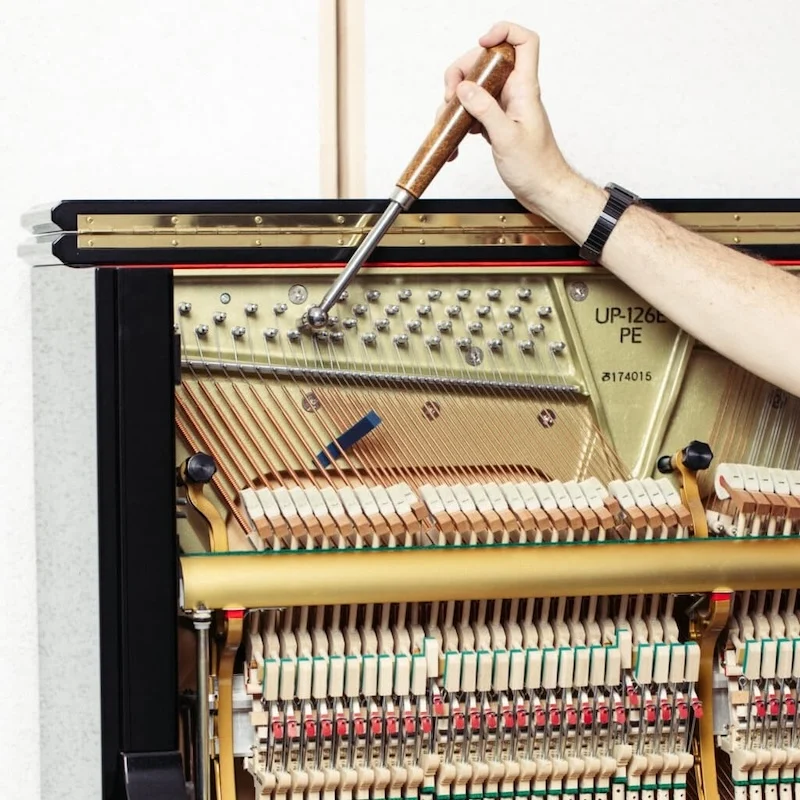


A piano operates under a very high level of tension, with the strings collectively exerting several tons of force across the frame. Over time, changes in temperature, humidity, and regular use cause this tension to shift, and the instrument gradually falls out of tune.
Most pianos benefit from tuning at least once a year, and more regularly if they are used heavily. A proper tuning is not simply bringing notes “into tune”, but ensuring that each string within a note is aligned and that the relationships between notes across the keyboard are balanced and stable.
I tune by ear using aural methods, working carefully through the instrument to leave it settled and reliable rather than just temporarily adjusted.
If a piano has not been tuned for several years, it will often have dropped significantly in pitch. In this state, a standard fine tuning is not enough, as the overall tension across the instrument needs to be restored first.
A pitch raise involves bringing the entire piano back up towards concert pitch in a controlled first pass, followed by a second, more precise tuning to stabilise it. Without this process, the piano will quickly drift out of tune again as the tension redistributes.
This is common with instruments that have been left for a long time, and in most cases they can be brought back to a stable and usable condition with the right approach.