
Enter the serial number below to calculate the age of your Blüthner piano, and its year of manufacture. Due to Blüthner's serial data being hard to find, the exact date of your piano could be a year more or less than the year shown.
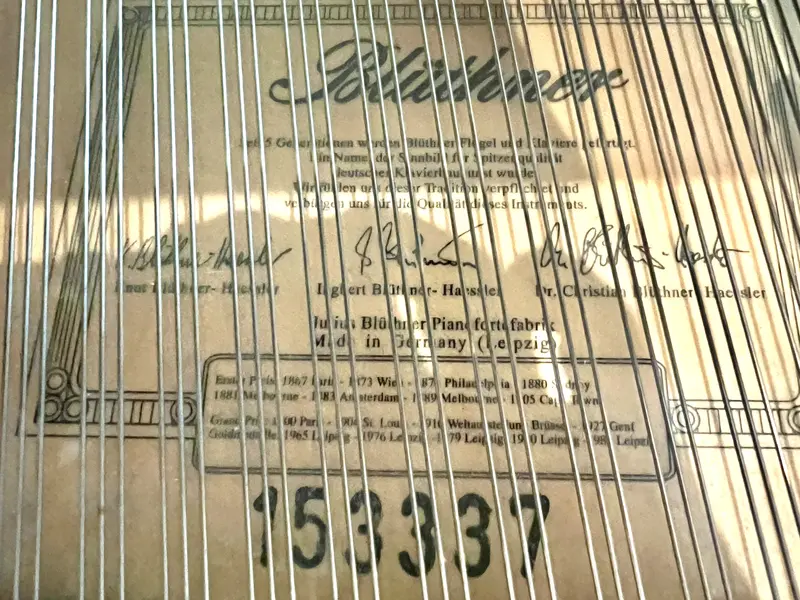
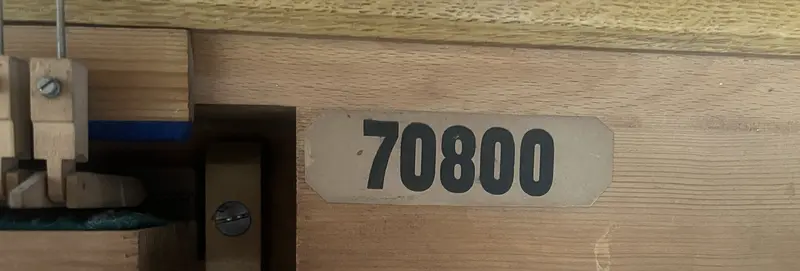
On Blüthner grand pianos, the serial number is sometimes found on the soundboard behind the dampers, or it can also be inside the piano by the left cheek block. On uprights, it is found on the top part of the plate if you open the top lid.
Blüthner is regarded as one of the great German piano makers along with Bechstein, Bösendorfer (technically Austrian), and Steinway & Sons. Blüthner pianos are known for their warm, romantic, and lyrical sound, often referred to as the "Golden Tone". Founded in Leipzig, Germany in 1853 by Julius Blüthner, their full tone and solid craftsmanship quickly attracted attention from musicians and conservatories across Europe. By the end of the 19th century, Blüthner had become one of the most successful piano manufacturers in Germany. During this peak of production, they were making thousands of pianos per year and exporting them all around the world, including many to Great Britain.
The twentieth century was a more complex time for Blüthner. The outbreak of the First World War in 1914 disrupted international trade and greatly reduced piano production across Germany. Like many manufacturers, the Blüthner factory faced shortages of materials and labour during the war. After the conflict ended, the company resumed piano production but entered a far more difficult economic period marked by inflation and instability in Germany during the 1920s. Despite these challenges, Blüthner remained an important manufacturer through the interwar years. The company was still producing instruments in Leipzig when the Second World War began in 1939.
During Allied bombing raids in 1943, the original Leipzig factory was mostly destroyed, bringing production to a standstill. When East Germany came under Soviet control, the company found itself on the eastern side of the Iron Curtain. Blüthner rebuilt the factory and continued production, but at a much lower volume as exports to Western Europe and the USA were very limited. In 1972, the East German government nationalised the factory, although members of the Blüthner family continued to run it in a managerial role.
When Germany reunited in 1989, the piano business was returned to the Blüthner family. Production was reorganised and modernised, and a new factory was established in the Leipzig area during the early 1990s. Since then, Blüthner has continued to build pianos as a family-run company, now managed by later generations of the Blüthner family. The firm produces grand and upright pianos as well as a number of related brands, including Haessler and Irmler, which allow the company to offer instruments at different price levels while keeping the main Blüthner line focused on high-end, traditionally built pianos.
One of the most defining characteristics of a Blüthner grand piano is the invention of the "Aliquot" stringing system. Introduced in 1873, this patented system features a fourth string in the upper treble section that is not struck by the hammer but vibrates sympathetically. Its purpose is to provide greater tone colour and fullness to the thinner-sounding upper treble; and because the fourth string is not dampened, it can provide more overtone texture as well. The jury is out on whether it makes a significant impact, or is perhaps more of a marketing ploy. From a piano tuning perspective, it means that Blüthner grand pianos with this addition can take a little longer to service.
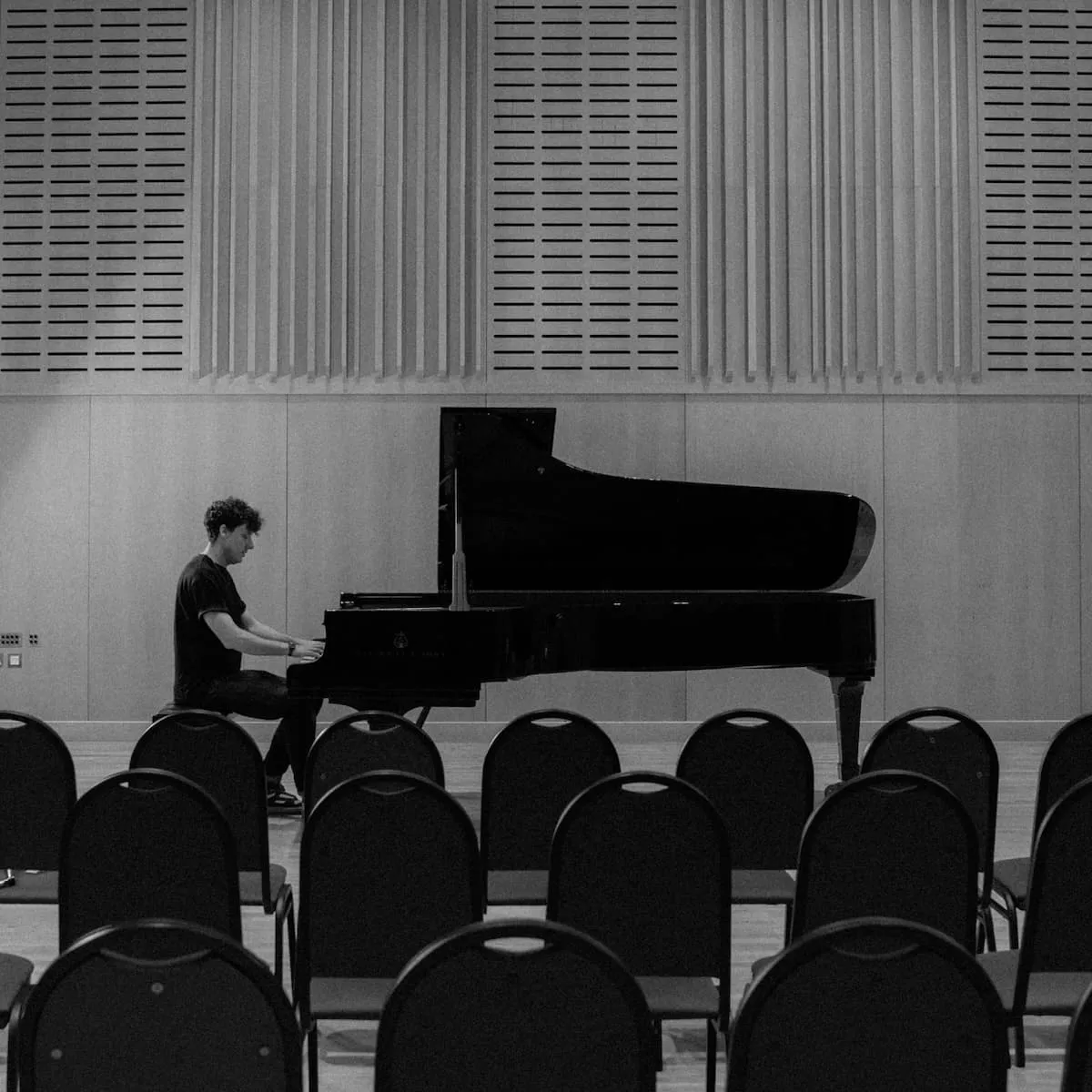
Personally, I think Blüthner pianos are really fine instruments. They have a lovely warm, full sound and are built exceptionally well. The ones I typically service fall into two categories: older pianos before World War 2, and newer ones from the start of German reunification in 1989. I assume this is because exports to the UK were very difficult, if not impossible, during the Cold War.
The older Blüthners tend to hold up very well, be they grands or uprights, and have a good strong tone. Even if they have been left for many years, they almost always can be recovered. The newer ones are very nice indeed, with a sound I find sweeter and more intimate than the big concert sound of a Steinway.
As a musician, I love playing them, as they sound great in studios and more intimate settings for jazz music. Unfortunately, they aren't that common in studios or venues in London. From a technician's perspective, they are a very well-engineered, beautifully designed instrument. Classic German craftsmanship! It's the little touches that make it. I would say though, I am not sold on the Aliquot system, as it only seems noticeable to me when the strings are out of tune! However, some really like it, and it does make Blüthner rather unique. Check out the Blüthner Piano Centre in Marylebone, London if you would like to play on one!