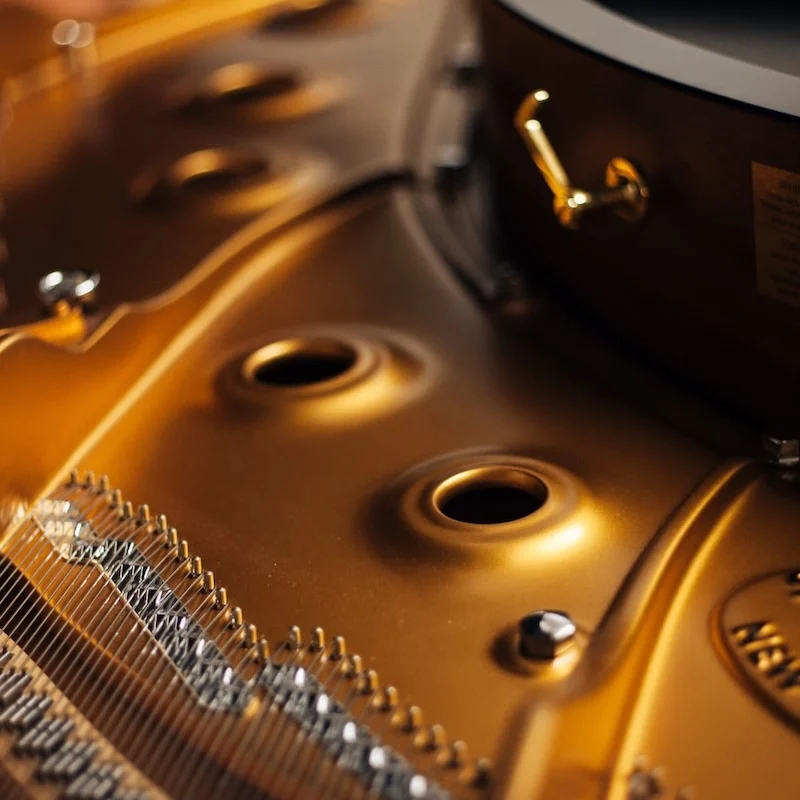
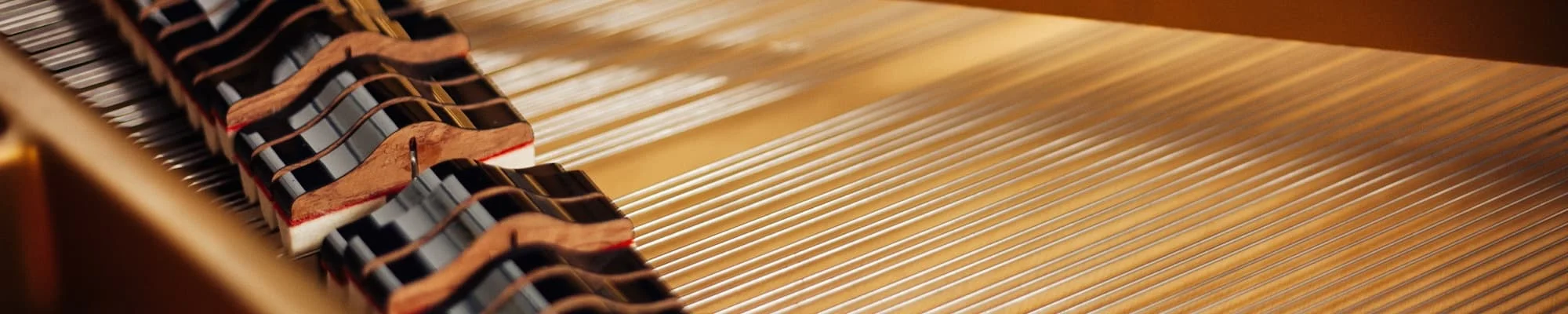

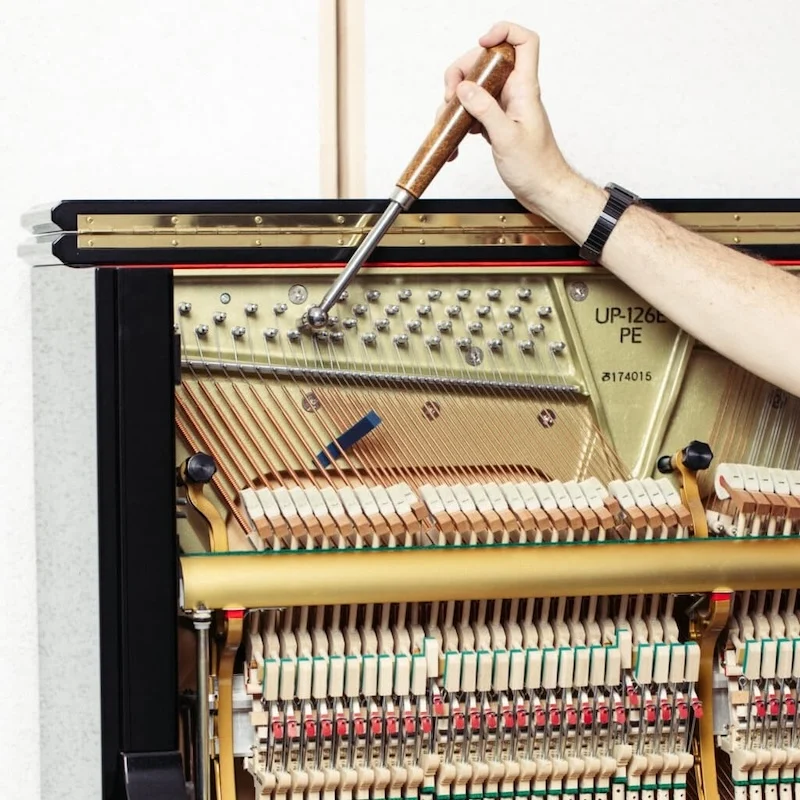
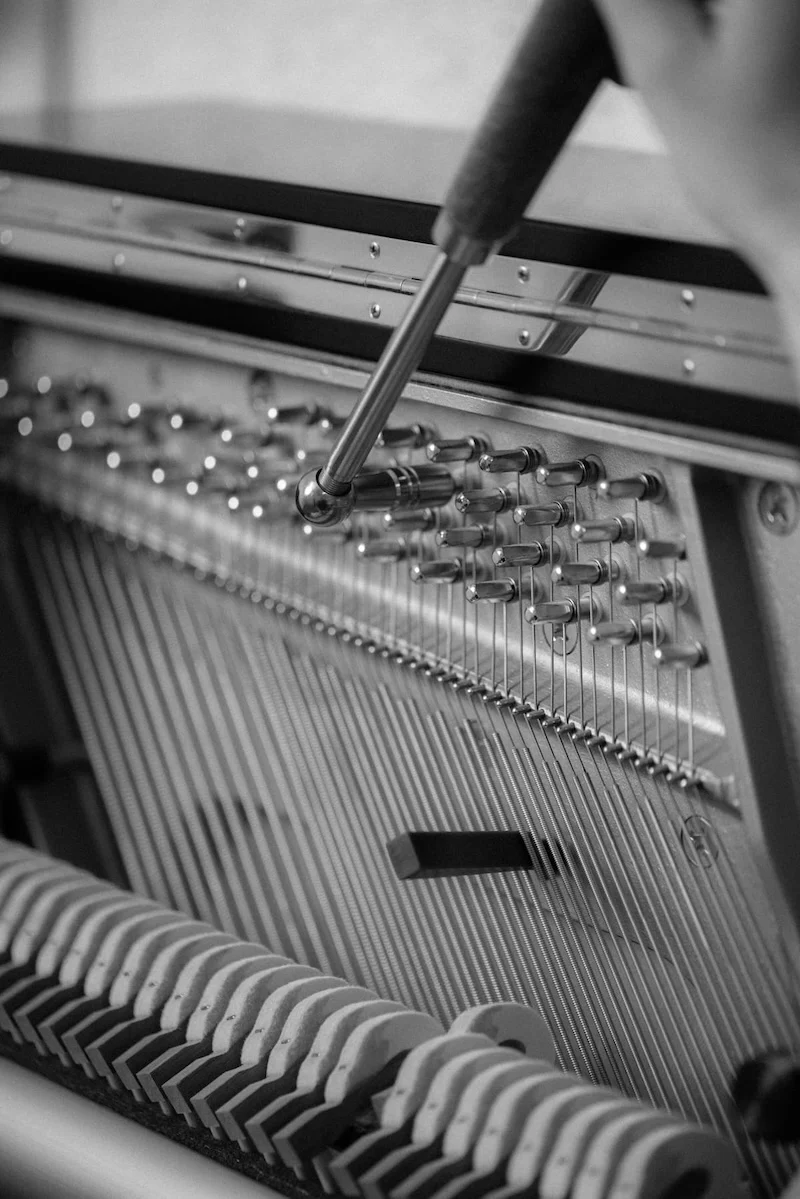
Pianos are tuned by adjusting the pitch of the strings. There are usually three strings per note, with two in the high bass and a single string per note in the low bass. This means there are over 200 strings in an average piano. Each of these strings has to be tuned to a precise pitch: in unison with the other strings in the note and in a relative pitch relationship to the other notes (an octave, fifth, etc.). This is called equal temperament.
Piano tuning is achieved by finely turning the tuning pins that the strings are attached to with a tuning lever. As there are many strings, this can take a fair amount of time. Because the adjustment is so minute, and the tension on piano strings is very high (several tons across the entire piano), tuning a piano is a challenging skill that takes many years of training and patience to master.
It’s recommended that pianos are tuned regularly to keep the tuning stable, to prevent the pitch from going flat, and most importantly, to keep them sounding their best for maximum enjoyment when playing.
The rates page has all prices, including for a standard piano tuning.
At least once a year; 2-3 times a year if you are a musician or frequent player, and regularly for a recording studio or concert hall.
A standard tuning usually takes about an hour.
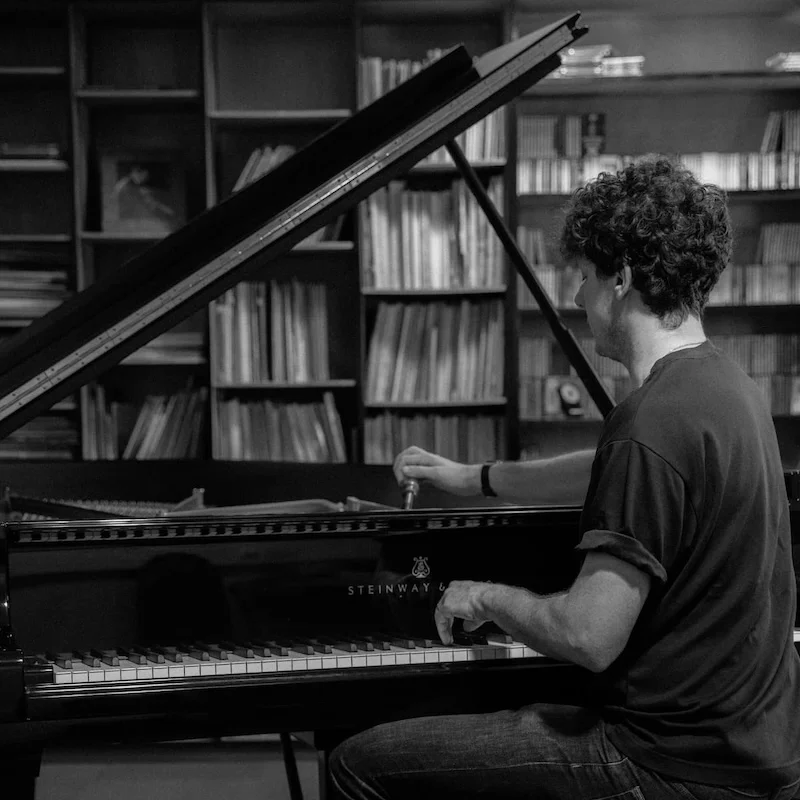
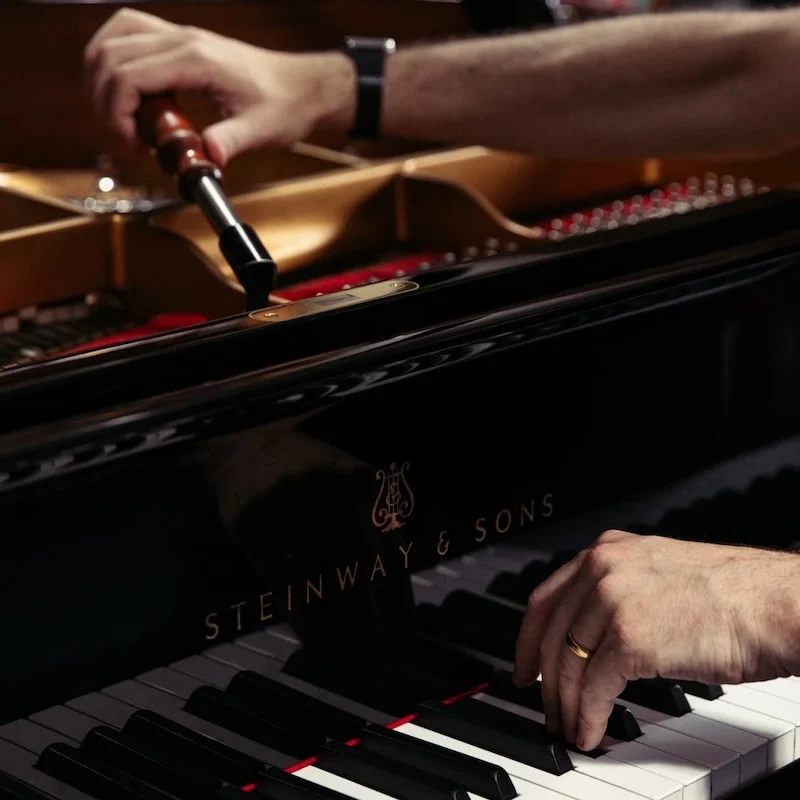

If your piano feels sluggish, spongy, uneven, or has issues such as bouncing hammers or ringing dampers, there’s a good chance it needs servicing. Pianos contain thousands of mechanical moving parts which, over time, begin to fall out of sync with one another. These parts are located in the piano action - the ‘engine’ of the piano.
Servicing the piano’s action is called regulation. This involves adjusting the various components so they interact correctly, with the goal of achieving an even and responsive touch throughout the keyboard. Adjustments may include aftertouch, let-off, key dip, lubrication of action centres, and more. Minor adjustments and small repairs are included with any service I offer, while full regulation is available as part of the half-day and full-day service packages.
A well-maintained piano should be serviced every few years. Proper regulation can transform how a piano feels to play, significantly improving control, consistency, and overall enjoyment for the pianist.
It depends on the how often it is played. A concert grand piano will often be serviced three times a year, but a semi-pro pianist might have their piano serviced every 3-4 years.
This is often due to a damper issue, where the damper is not fully contacting the string. It may be slightly misaligned, worn, or affected by regulation changes over time. Damper adjustments are usually routine and can often be corrected during a standard service.
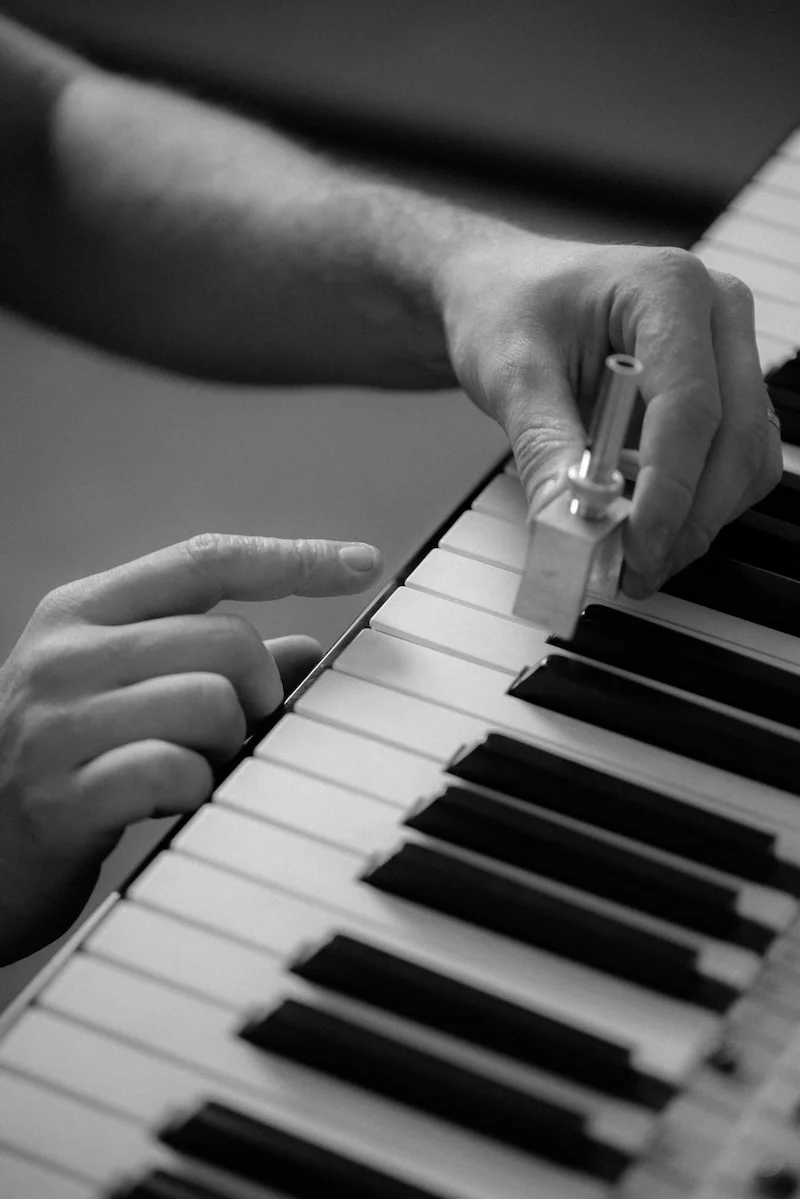
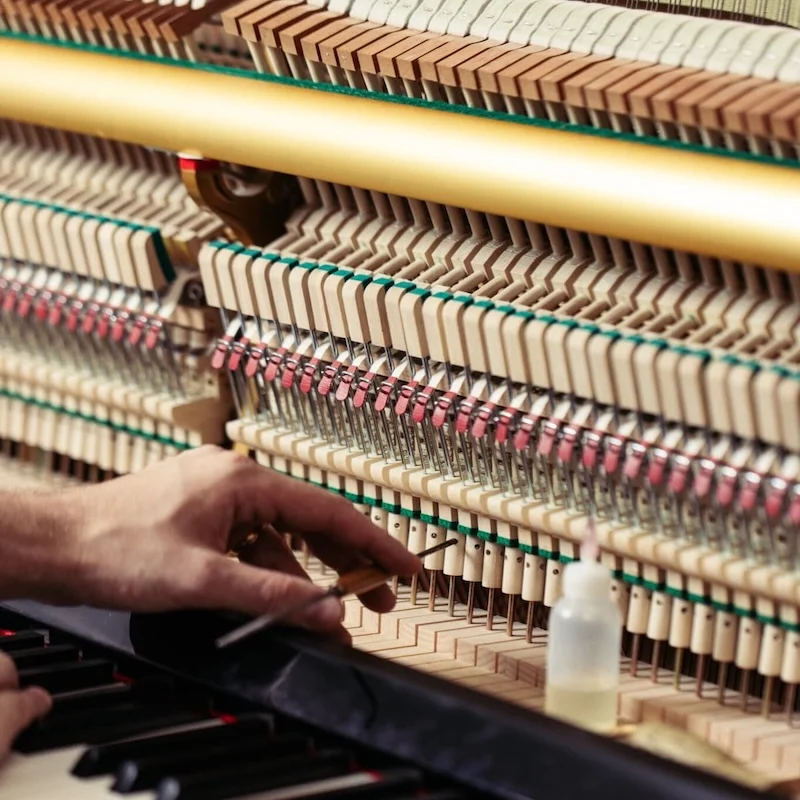

Pianos are made up of thousands of moving parts, so it is natural for some components to become worn, damaged, or broken over time. Common repairs I regularly carry out include sticking keys, broken strings, worn or damaged hammers, cracked key ivories, ringing dampers, squeaking pedals, and loose or missing action parts. These, along with other mechanical issues that develop over the life of a piano, mean that most faults can be repaired effectively.
In many cases, these issues can be resolved within the same visit, restoring the piano’s reliability and playability. More complex repairs, such as broken bass strings or missing action components, may require specialist replacement parts to be sourced and fitted. However, the majority of problems reported by customers are straightforward to address, allowing the instrument to be back in proper working order as quickly as possible.
A sticking key can be caused by several factors, including humidity changes, dirt or debris under the keys, tight felt bushings, or minor mechanical misalignment. Even small objects such as coins, dust, or paper can become lodged inside the action and restrict movement.
If a key produces no sound, the cause is usually a broken string, disconnected action part, or hammer issue. This is less common than sticking keys but is still a straightforward repair.
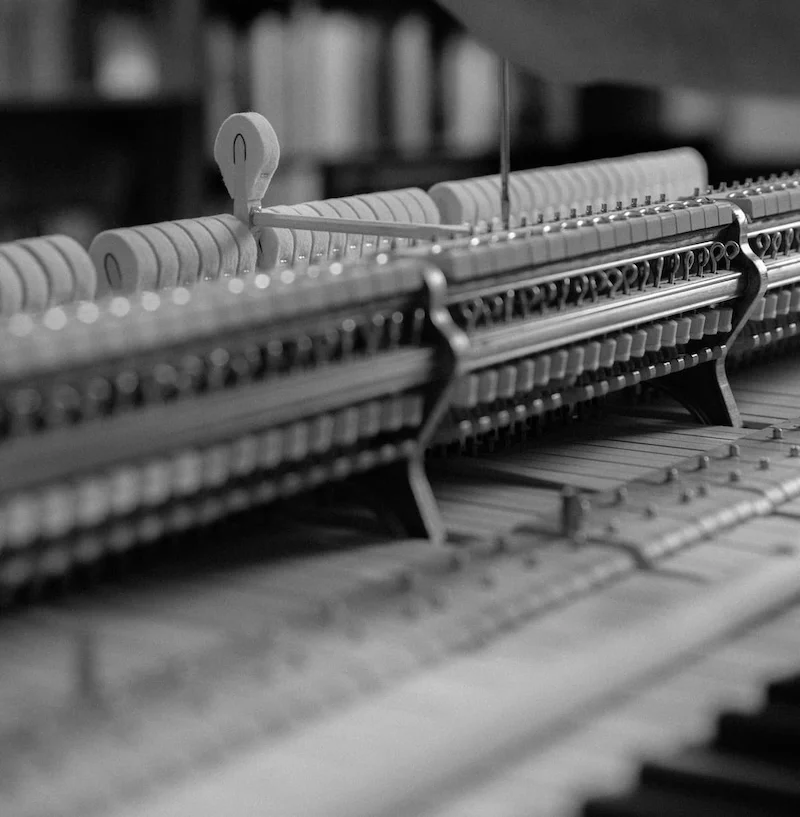
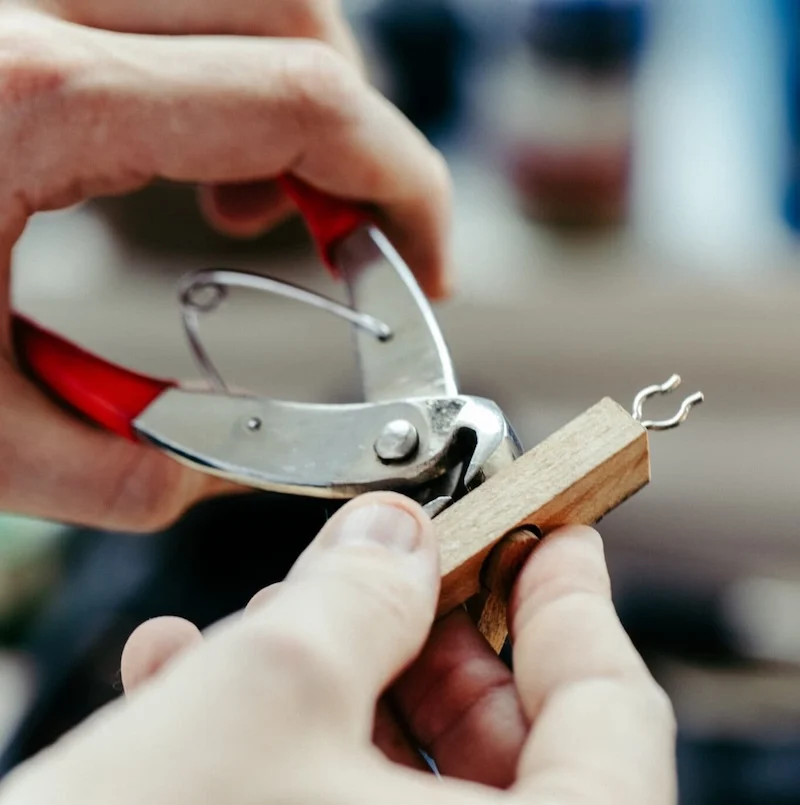

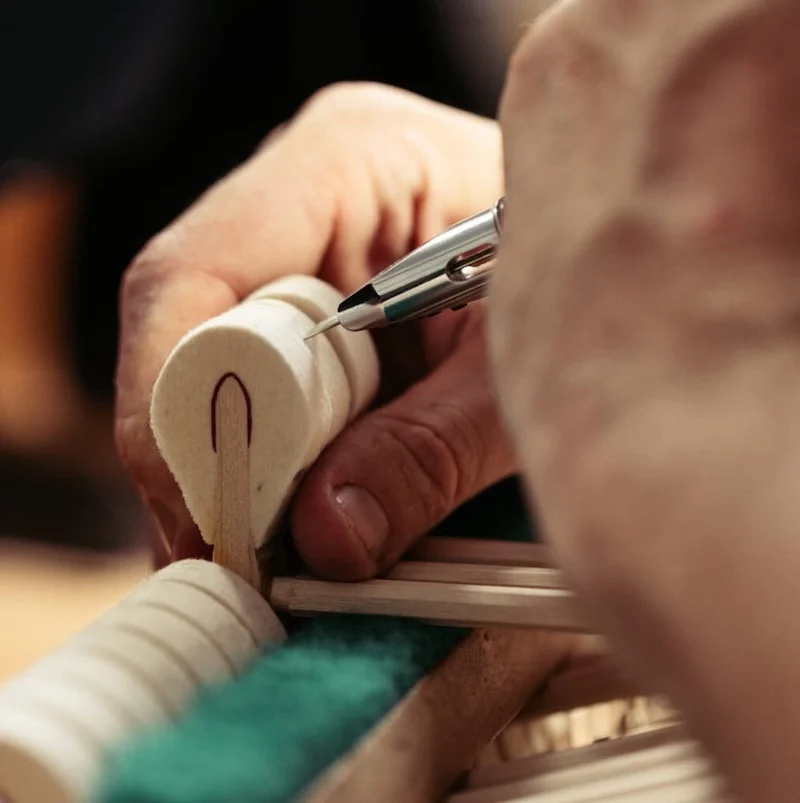
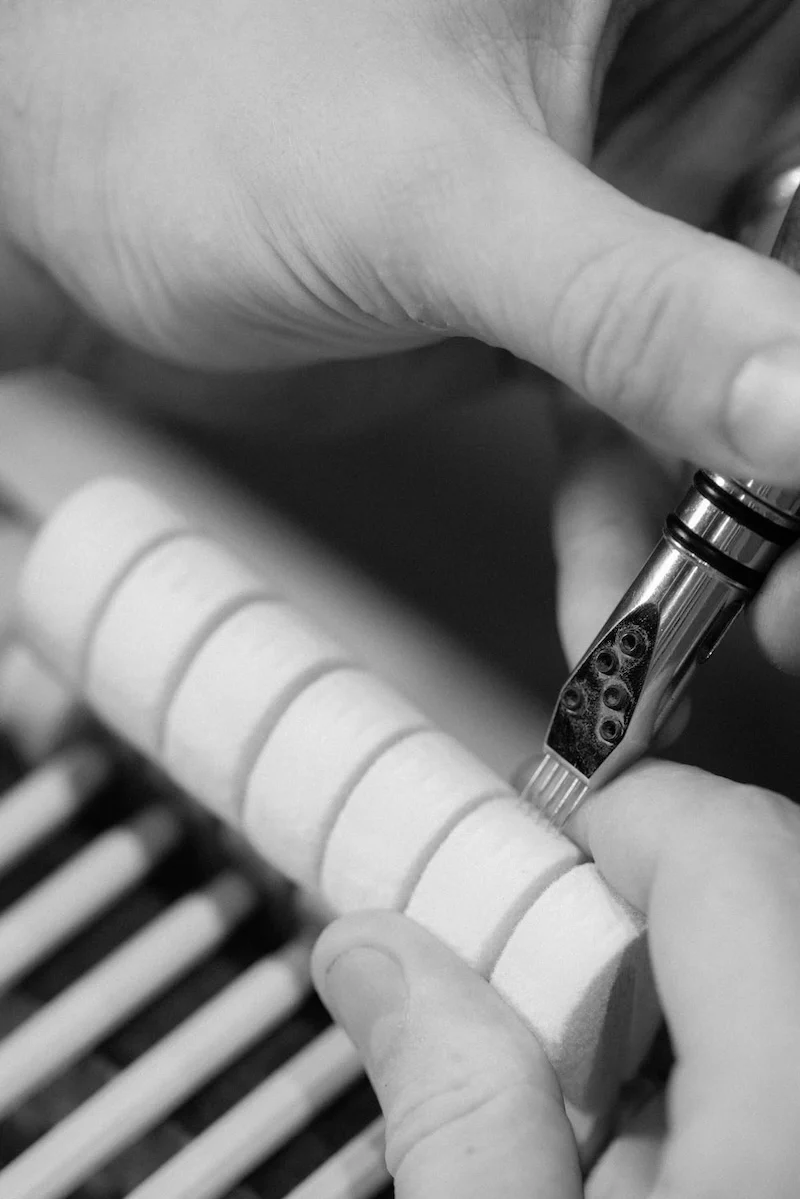
Once a piano is finely tuned and regulated, attention can be turned to shaping the tone. The sound of a piano is produced by compressed felt hammers striking the strings, and over time these hammers naturally develop grooves and become harder. This often results in a tone that is overly bright, harsh, or uneven across the keyboard. Correcting and refining this tonal character is known as voicing (or toning).
Voicing allows the sustain, brightness, and warmth of the piano to be carefully adjusted to suit both the instrument and the player. Through precise hammer filing, needling, and subtle tonal adjustments, the character of the sound can be balanced so that the piano speaks more evenly from note to note. This can greatly improve dynamic control, clarity, and overall musical responsiveness.
To bring out the very best tone your piano can offer, voicing is typically the final stage of the servicing process, following tuning and regulation. When carried out correctly, it can unleash the quality of the instrument, making it more expressive, refined, and enjoyable to play.
Not exactly. Tuning adjusts the pitch of the strings, whereas voicing adjusts the tonal character of the piano. A piano can be perfectly in tune but still sound harsh, dull, or uneven if the hammers require voicing. But a piano does need to be in good tuning in order to voice properly, so the two are linked.
Usually yes. Much of the time, lightly filing the hammers can remove the deep grooves made from the hammer striking the string and restore brightness.

A piano should be tuned regularly, ideally at least once a year. If a piano has not been tuned for several years, it will usually be both flat and out of tune with itself. This can make playing with other musicians, singers, or recordings quite frustrating. Over time, piano strings gradually lose tension and very slightly unwind, causing the pitch to drop.
The solution is to bring the piano back to its original pitch. In brief, two tunings are often required: the first to raise the pitch back to concert pitch (A440), and the second to fine-tune and stabilise the tuning. In cases where the piano is more than a semitone flat, a third stabilisation tuning may be necessary. These tunings are carried out consecutively to allow the tension across the piano to settle properly.
Pitch raising takes additional time, but it solves two problems at once: the piano being flat, and being out of tune. Where required, pitch raising is included in my services except for the standard piano tuning.
Usually, but it does depend. If the piano is a good quality instrument that isn't extremely old, then there's a good chance that it will survive a pitch raise. However very old pianos likely have corrosion, mildew/mould, and other issues that can cause problems when attempting a pitch raise. Usually this can result in broken strings, which can be time consuming and expensive to fix if there are many. I can always take a look at the piano and advise from there.

If you are thinking of buying or selling a piano, it is well worth having it valued by a professional. Many people judge a piano primarily by its cosmetic appearance, but this forms only a small part of the instrument’s true overall value. A proper valuation takes into account the condition of the action, strings, soundboard, tuning stability, structural integrity, and general level of maintenance, all of which significantly affect both performance and market value.
I provide a detailed inspection report covering the strings, action, soundboard, pedals, plate, and other key mechanical and structural components of the instrument, along with an informed estimate of its current value. This allows buyers and sellers to make realistic decisions based on the piano’s musical condition, not just its external appearance.
Valuations can be provided for insurance, probate, sales, and other financial purposes. While the true value of a piano ultimately lies in how it plays and sounds, accurate pricing is essential, particularly for higher-value instruments or those being restored, insured, or professionally used.
It really depends, mostly on the type of piano. High end grand pianos like Steinway & Sons and Bösendorfer tend to hold value, but many mid-range makes do not. It also depends far more on a pianos condition, brand, and playability than its age alone. Many older pianos, particularly mass-produced uprights, are unfortunately not worth anything anymore.
Usually not. If you mean an older upright off Facebook Marketplace or somewhere similar then I highly recommend avoiding them. Pianos are usually free for a reason, and one way or another they will cost you money. However if you know someone who is giving you a free Steinway then it might be worth taking!
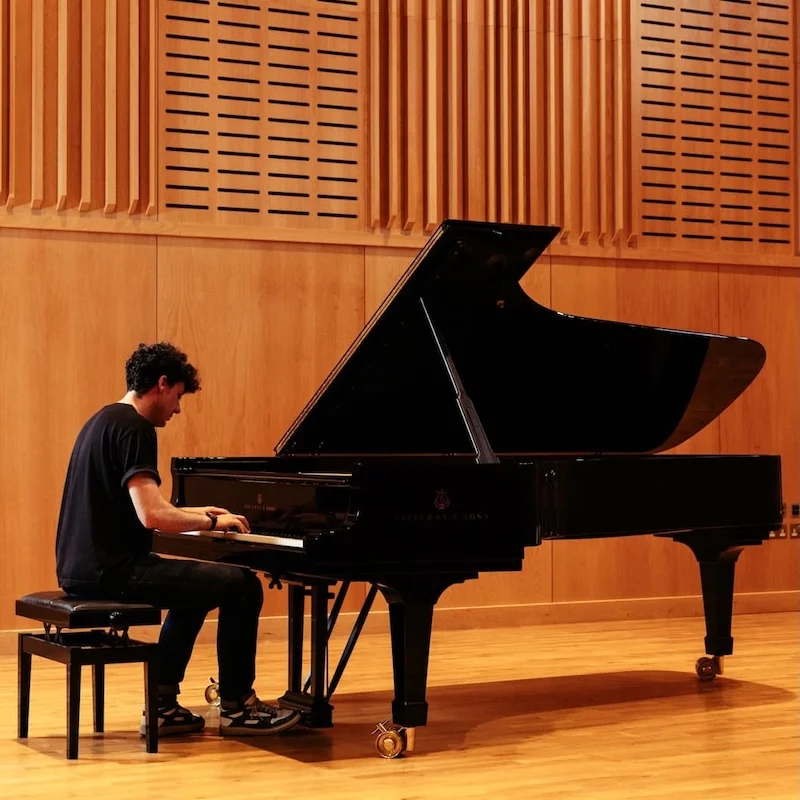
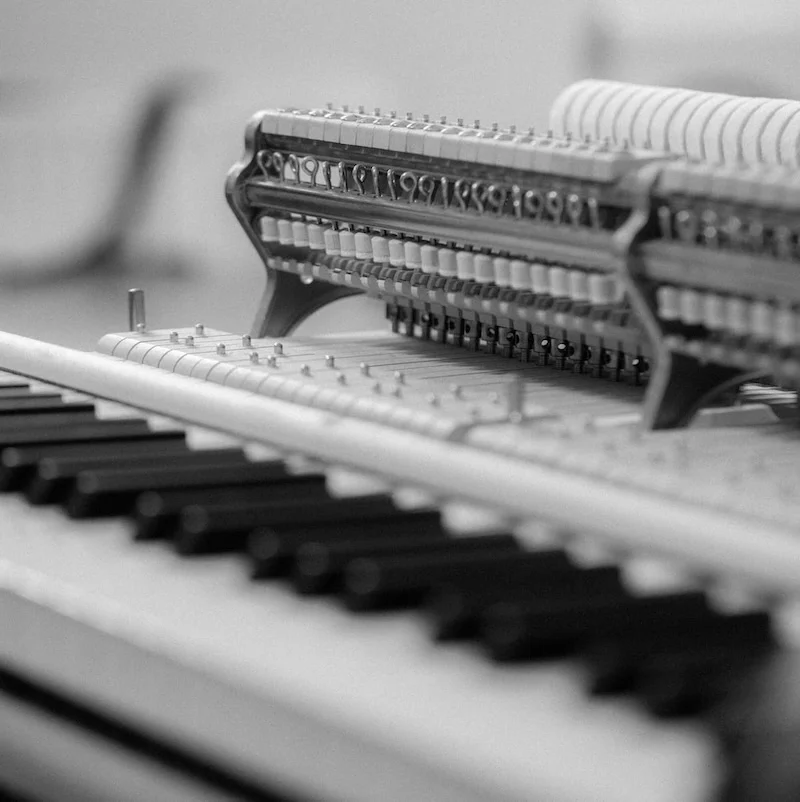

Over time, pianos naturally lose the clean finish and appearance they had when first purchased. Dust, marks, and debris can accumulate, particularly inside uprights and under the strings on grand pianos. Foreign objects can also find their way inside the instrument, such as pencils, sometimes affecting both playability and performance. This is especially common in family homes with children.
A full cleaning involves carefully vacuuming the interior, removing marks and stains from keys, wiping the exterior surfaces, and removing dust from hard-to-reach areas such as the soundboard and underneath the keyboard.
More intensive French polishing can also be undertaken to reduce the appearance of scratches, chips, stains, and wear to the cabinet or case. I use a specialist for this service. Please get in touch for further details.
Yes! I have a cleaning tool that allows me to get into hard to reach places such as this and clean almost every part of either grand or upright pianos.